Dr. Gymbro
←

#cystatin c

1 article
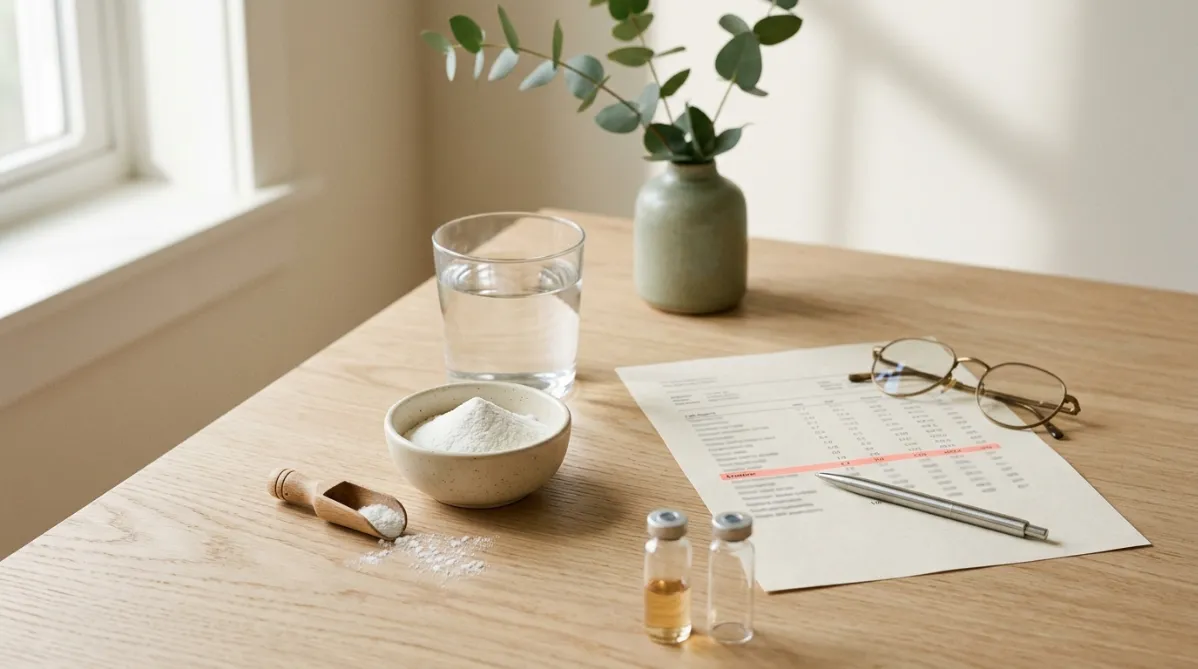
A calm, modern editorial still life shot from a slightly elevated angle on a pale oak tabletop, bathed in soft natural window light from the left. At center sits a clear glass of water beside a small matte ceramic bowl holding a mound of fine white creatine powder, with a wooden scoop resting next to it and a few loose grains dusted across the surface. To the right, a neatly arranged printed lab report on cream paper, with blurred rows of numbers and a single line highlighted in soft coral pink marker, partially overlapped by a minimalist silver pen. A folded pair of thin-framed glasses sits at the edge of the paper. In the foreground, a small glass vial with a pale amber liquid sample and a second empty vial stand upright, suggesting blood and urine testing, with gentle refraction and soft caustic light on the wood. Behind them, a sprig of eucalyptus in a small stone vase adds a touch of green. The background is a softly blurred, warm off-white wall with a gentle gradient shadow and a hint of a window frame. The palette is muted and refined: warm creams, sage green, soft coral, pale amber, and light oak, with crisp whites in the powder. Shallow depth of field, with the powder bowl and highlighted lab line in sharp focus and the edges falling away into creamy blur. Generous negative space on the right third of the composition for text overlay. The overall feel is clean, trendy health-journal photography, tactile and editorial, with subtle film-like grain, natural shadows, and a quiet, reassuring mood. No people, no text legible, no futuristic elements.
supplements

Creatina aumenta i marcatori renali in 26 studi: probabilmente non danneggia

BY DR. GYMBRO ·

Cominci a prendere creatina, fai gli esami del sangue e scopri che la creatinina è più alta, mentre l’eGFR sembra peggiorato. Una meta‑analisi del 2026 su 26 studi randomizzati (1.036 partecipanti) ha confermato questi risultati: la creatinina è aumentata di 0,14 mg/dL e l’eGFR basato sulla creatinina è sceso di circa 10,75 mL/min. Tuttavia, quando la filtrazione renale è stata misurata con Cr‑EDTA, la diminuzione non è comparsa, e i valori di urea, albuminuria e proteinuria sono rimasti invariati. Ecco perché quel valore di laboratorio può fuorviare, cosa dire al medico e a chi è consigliato consultare prima un nefrologo.

This page is available in